Accelerometers play a vital role in automotive, aerospace, healthcare and many other industries. Many project engineers feel confused when choosing between uniaxial and triaxial accelerometers. This practical guide clarifies their differences, common types and core strengths. It helps you make the best choice for your testing and monitoring projects.
Uniaxial vs Triaxial Accelerometers: Key Differences
The biggest gap between the two sensors lies in measurement capacity.
A uniaxial accelerometer only tracks movement along one single axis, X, Y or Z. It fits simple linear motion tests, such as routine vibration checks for industrial machinery.
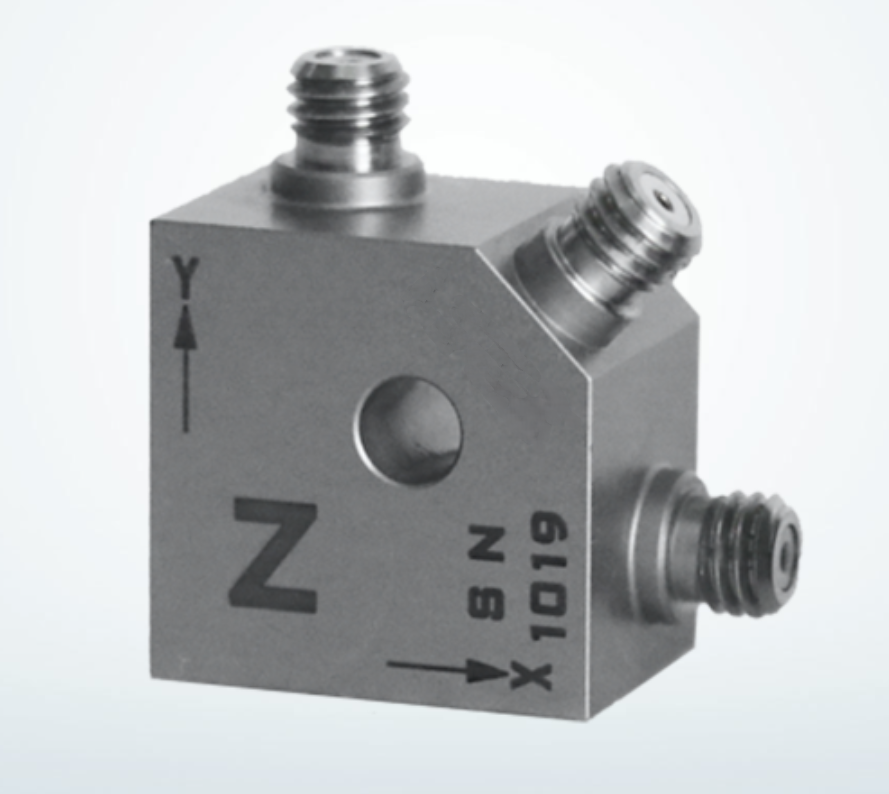
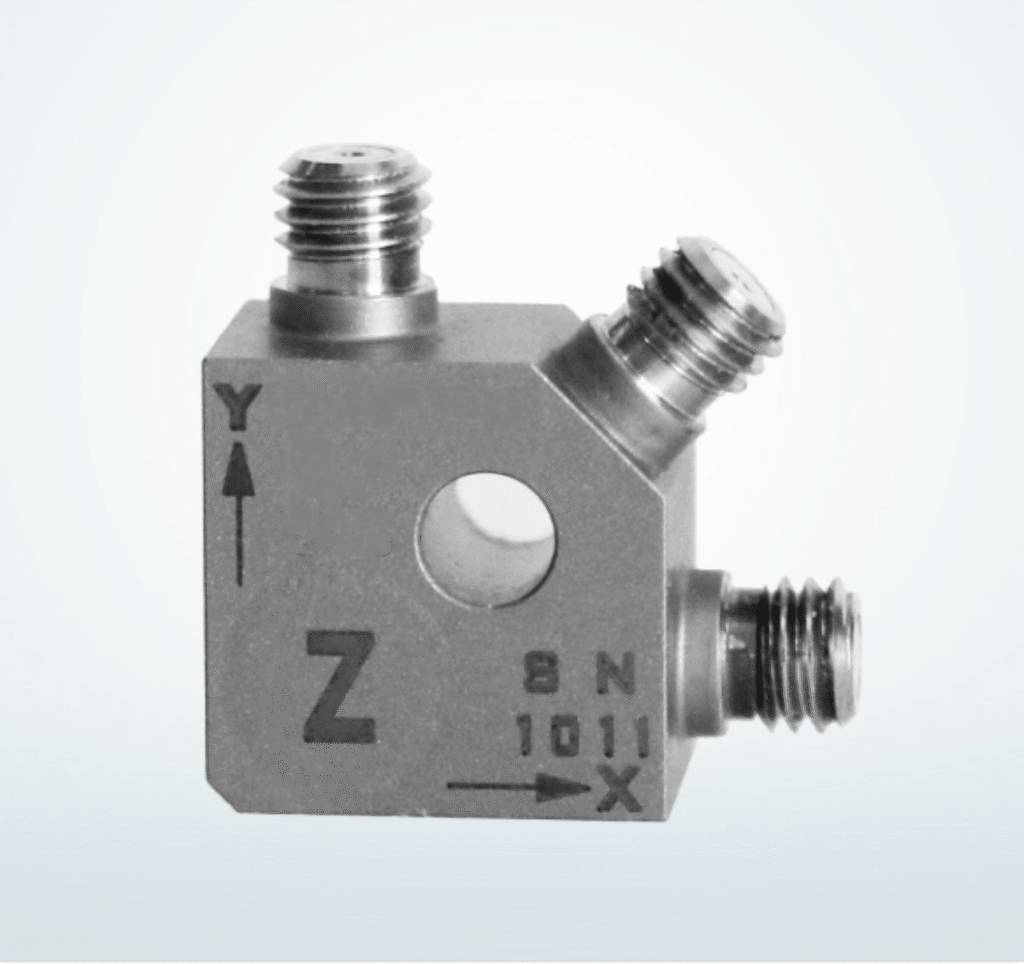
A triaxial accelerometer captures acceleration on X, Y and Z axes at the same time. It works well for complex multi-directional motion. For example, it monitors aircraft vibration and human movement in sports research. For projects that need full 3D motion data, triaxial sensors are the more practical choice.
Common Types of Accelerometers
Different working principles suit different working environments. Here are four widely used types:
- Piezoelectric AccelerometersIt relies on piezoelectric crystals to generate voltage under mechanical force. It is the top choice for high-frequency vibration monitoring.
- MEMS AccelerometersCompact size and low cost are its biggest strengths. It is widely applied in consumer electronics and general industrial equipment.
- Capacitive AccelerometersIt detects motion by measuring capacitance changes. It performs stably for low-frequency work like angle and tilt detection.
- Triaxial AccelerometersThis integrated design combines three sensing units. It supports 3D motion tracking, and serves robotics, structural monitoring and wearable devices.
Main Advantages of Triaxial Accelerometers
Triaxial accelerometers simplify the whole data collection work. They bring clear benefits for field use:
- Collect all-direction motion data with just one sensor
- Cut down installation errors caused by multiple separate sensors
- Save installation space for compact devices like drones and medical tools
Many professional teams prefer triaxial accelerometers for real-time and precise motion analysis.
Typical Application Industries
These sensors serve a wide range of fields:
- Automotive performance testing
- Aerospace equipment monitoring
- Industrial automation systems
- Sports science and biomechanics
- Structural health monitoring for buildings and machinery
Our Accelerometer Solutions
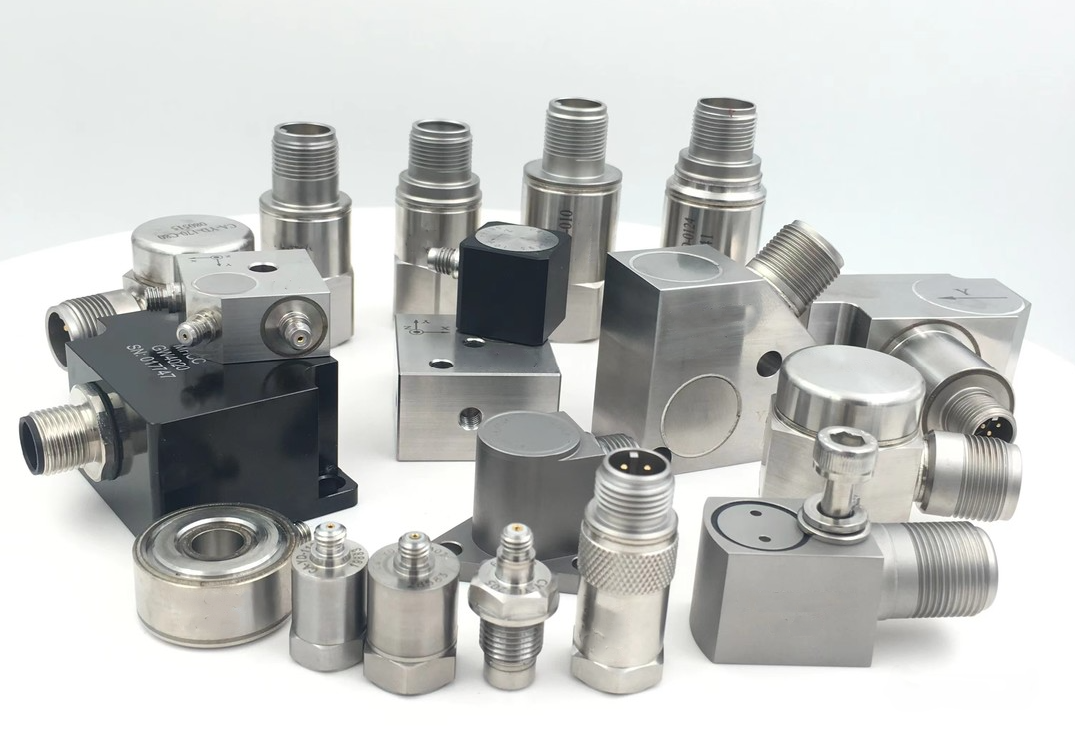
As a professional sensor supplier, Dabey provides high-performance uniaxial and triaxial accelerometers for tough working conditions.
- Durable structure to resist extreme temperature and strong shock
- Custom specifications to match unique project requirements
- Cost-effective price with reliable quality
You can browse our full sensor range or request a free sample to test performance on your projects.
FAQ
- Q: What is the difference between uniaxial and triaxial accelerometers from Dabey?
A: Our uniaxial models measure motion along one axis. Triaxial sensors capture X, Y and Z three-axis data at the same time for complex 3D tests. - Q: What high-temperature accelerometers do you offer?
A: We have multiple high-temp models. The 682C02 works steadily up to 500°C for extreme heat testing. - Q: What applications fit your accelerometers best?
A: They suit aerospace engine tests, automotive testing, industrial vibration monitoring and turbine measurement. - Q: Do your sensors support high impact and vibration tests?
A: Yes. Our products feature wide measuring ranges and firm structure, ideal for impact and shock testing. - Q: What types of accelerometers can I choose from your brand?
A: We provide piezoelectric, voltage and MEMS accelerometers with diverse ranges and frequency responses. - Q: Can you customize accelerometers for special projects?
A: Sure. We can adjust sensitivity, measuring ranges and connectors to meet your unique demands. - Q: Can I get free samples for on-site testing?
A: Yes. Feel free to contact our team to apply for free sensor samples.